
FDA's 483 Playbook: What It Means For Pharma Outsourcing — And What It Doesn't Address
By Kishore Hotha, Ph.D., MBA, president, Dr. Hotha’s Life Sciences LLC
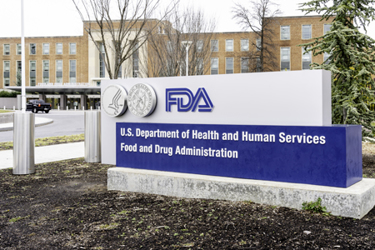
For decades, the pharmaceutical industry has followed an unwritten understanding regarding FDA Form 483 observations: you receive them, respond to them, and hope the response is sufficient to prevent a Warning Letter. The document’s format, depth, rigor, and even who signs it has been largely guided by institutional memory and the experience of those involved.
That compact just got formalized.
In March 2026, the FDA issued a draft guidance titled “Responding to FDA Form 483 Observations at the Conclusion of a Drug CGMP Inspection.”1 It is the first standalone guidance the Agency has released that focuses entirely on how manufacturers should organize, write, and submit their 483 responses. It applies to all CGMP inspections — routine surveillance, for-cause, preapproval, and prelicense — covering products regulated by CDER, CBER, and CVM, including 503B outsourcing facilities and combination products.2
For those of us involved in outsourcing, from running contract laboratories to managing analytical testing for sponsor companies to overseeing CDMO operations, this guidance not only alters how we respond to a 483 but also reshapes the accountability framework between sponsors and their contract partners.
What The Guidance Actually Says
The guidance codifies what experienced quality leaders have been doing for years while also exposing gaps at sites that haven’t. A few elements stand out:
- Executive management must sign the response. Not QA. Not Regulatory. The person who allocates resources and has the authority to implement commitments. This is a deliberate elevation of accountability.2,3
- A structured format is now expected. Table of contents, executive summary table with CAPA tracking, numbered observation sections, signed attachments.1 The days of narrative-style letters with vague commitments are numbered.
- Root cause analysis must be multi-hypothesis. FDA states directly that addressing only the most obvious causal factor is “often not sufficient.”1 Sites must identify multiple potential causes, investigate each individually, and test using scientifically supported approaches.
- CAPA effectiveness must go beyond routine retesting An adequate effectiveness check cannot consist solely of routine sampling and testing. If CAPA measures don’t address the issue, the establishment must revisit the investigation.1,3
- Investigation scope must expand beyond the cited observations, to other drugs, processes, facilities, and contract organizations.1,4 This is where the outsourcing implications are particularly interesting.4
The Outsourcing Implications Nobody Is Talking About
Most commentary on this guidance has focused on the mechanics: the 15-day window, the format requirements, the CAPA expectations. These matter. But for the outsourcing community, the real significance lies in three areas that haven’t received enough attention.
1. The “Contract Organizations” Language
The guidance explicitly states that establishments should determine if deficiencies described in an observation affect “other drugs, processes, or associated facilities and contract organizations” and expand their investigations accordingly.1 This is not a throwaway line. It means that when a CDMO receives a 483 observation, the investigation plan must consider whether the same deficiency exists at contract testing laboratories, packaging partners, API suppliers, and any other outsourced function in the supply chain.
For sponsors, this creates a reasonable expectation that their contract partners are conducting investigations beyond their own operations. For CDMOs, a 483 response that only addresses internal procedures without considering upstream and downstream partners might be seen as incomplete.
2. Who Signs, and What That Means for Outsourcing Governance
The guidance’s emphasis on executive management signatures (specifically, someone with the authority to allocate resources and implement commitments) has direct implications for how outsourced facilities are governed.
In many contract manufacturing and testing arrangements, the site leader or general manager of the CDMO typically holds operational authority. However, in investor-backed CDMOs, where capital allocation decisions might be made by a holding company, a portfolio management team, or a VC-backed parent, the question of who genuinely has the authority to commit resources becomes more complex. If the person signing the 483 response cannot actually approve a $500,000 equipment purchase or a facility upgrade without corporate approval, does that signature truly carry the weight the FDA expects?
Sponsors should ask this question during quality agreement negotiations and technical audits, not after a 483 is issued.
3. Quality Culture Is Now an Explicit Expectation
Perhaps the most subtly important part of this guidance is the recommendation that establishments consider “how improvements to the quality system, personnel management, and overall quality culture may enhance organizational performance.” The FDA also questions why the quality unit didn’t identify the issue before the inspection.5
For CDMOs, this creates a direct challenge to the usual operating model, where quality assurance staff are kept at minimum compliance levels, experienced QA professionals are spread across too many clients, and the organizational incentive structure favors throughput over thorough investigation. From my experience managing CDMO operations and overseeing more than 80 client partnerships, the sites that consistently avoid 483 escalations are not the ones with the most advanced SOPs — they are the ones where a quality culture is integrated into daily decision-making at every level of the organization.1,4
Sponsors who evaluate CDMOs solely based on turnaround time, cost per sample, and method validation success rates overlook the most critical predictor of inspection results: whether the site’s culture views quality as a governance function or simply a checkbox.
The 15-Day Window: What Sponsors And CDMOs Get Wrong
The 15-business-day response window has long been industry standard, but the new guidance clarifies it significantly. The FDA states that if a response is received within 15 business days, it will conduct a thorough review before deciding whether to take further action. Conversely, the FDA will generally not delay regulatory actions, such as issuing a Warning Letter, to review a response received more than 15 business days after the action was taken.1,6
For outsourced operations, this timeline presents a coordination challenge that many organizations are unprepared for. When a CDMO receives a 483, the sponsor often needs to be notified, quality agreements reviewed, shared investigations initiated, and the sponsor’s regulatory team may need to prepare supplemental filings. All of this must happen within a 15-day window that also includes drafting the response, conducting investigations, and developing CAPA plans.
Organizations that wait until a 483 is issued to figure out their response workflow are already behind. The response infrastructure — templates, escalation protocols, investigation frameworks, and communication plans — should be established well before an inspection. In the outsourcing context, this means sponsors and CDMOs must align on these protocols during the quality agreement phase, not in the 72 hours after an inspection closes.
What This Means for Pharmaceutical Outsourcing Relationships
This guidance will inevitably become a reference point in sponsor–CDMO negotiations. I expect to see the following shifts over the next 12 to 18 months:
- Quality agreements will need to explicitly address 483 response protocols. This includes who leads the response, how the sponsor is notified, what role the sponsor plays in reviewing the response before submission, and how investigations involving shared processes are coordinated.
- Sponsor audits will increasingly assess 483 response readiness. Not just whether the site has had recent 483 observations, but whether the site has a documented response framework, trained investigation teams, and executive-level engagement in CAPA governance.
- CDMOs will need to demonstrate investigation capability, not just testing capability. The guidance’s emphasis on multi-hypothesis root cause analysis, scientific verification, and expanded investigation scope means that contract partners must have investigation competency that goes well beyond checking a box.1,4,6
- The conversation about consultant engagement will change. The FDA specifically recommends engaging CGMP consultants when observations involve data integrity findings. For CDMOs handling sensitive analytical data for multiple sponsors, this recommendation carries particular weight.
A Comment Period Worth Engaging With
The comment period for this draft guidance closes on May 8, 2026. This is one of those rare instances where the industry has a direct opportunity to shape a guidance document that will affect every drug manufacturing establishment in the country. Here are a few areas where industry input would be particularly valuable:
- Clarification on the scope of the contract organization investigation: The guidance instructs expanding investigations to “associated facilities and contract organizations,” but the practical boundaries of this requirement must be clarified. How far should the investigation extend down the supply chain? What constitutes a sufficient assessment of a contract partner’s involvement?
- Executive management authority in multi-site organizations: For CDMOs operating under holding companies or PE-backed structures, the guidance’s requirement for executive management signatures needs clarification. Who is the appropriate signatory when capital allocation authority sits above the site level?
- CAPA effectiveness criteria: The guidance states that effectiveness evaluation must go beyond routine sampling and testing, but it provides limited examples of what constitutes an adequate effectiveness check. Industry-specific examples would strengthen the final guidance.7
- Interim reporting expectations for complex remediation projects: The guidance suggests having communication plans with milestone deliverables but does not specify what makes an appropriate reporting schedule. For multi-year remediation efforts, common in facility upgrades or data integrity projects, more detailed guidance would be beneficial.7
The Bottom Line: Shared Responsibility Is Now Explicit
This guidance is not a revolution. For establishments with mature quality systems, experienced investigation teams, and strong executive engagement, most of what’s in this document is already standard practice. What the guidance does is make the implicit explicit — and in doing so, it creates a measurable standard against which every 483 responses will now be evaluated.
For the outsourcing community specifically, this guidance serves as a reminder that a 483 observation at a contract site is never solely the CDMO’s problem. It is a shared responsibility; one that demands shared infrastructure, investigation capabilities, and a collective commitment to a quality culture that extends beyond the language of a quality agreement.
The establishments that treat 483 responses as strategic quality documents — not defensive letters — will be the ones that turn this guidance into a competitive advantage.
References
- FDA Draft Guidance for Industry: “Responding to FDA Form 483 Observations at the Conclusion of a Drug CGMP Inspection” (March 2026). Available at: https://www.fda.gov/regulatory-information/search-fda-guidance-documents/responding-fda-form-483-observations-conclusion-drug-cgmp-inspection
- Federal Register Notice, Docket No. FDA-2025-D-1504 (March 9, 2026). Available at: https://www.federalregister.gov/documents/2026/03/09/2026-04578/responding-to-fda-form-483-observations-at-the-conclusion-of-a-drug-cgmp-inspection-draft-guidance
- ICH Q10 Pharmaceutical Quality System (April 2009).
- 21 CFR 211.192 — Production Record Review. https://www.ecfr.gov.
- ICH Q9(R1) Quality Risk Management (May 2023).
- FDA Investigations Operations Manual (2025), Chapter 5.
- FDA Guidance for Industry: Data Integrity and Compliance with Drug CGMP Questions and Answers (December 2018). https://www.fda.gov/media/166533/download?attachment.
About The Author:
 Kishore Hotha, Ph.D., is the president of Dr. Hotha’s Life Sciences LLC, a global consulting firm. He is an accomplished scientific and business leader in the pharmaceutical biotech and CDMO sectors, spanning drug development from early-stage research to commercialization. He has made significant contributions to numerous IND, NDA, and ANDA submissions for drug substances and products across small and large molecules, including ADCs, oligonucleotides, and peptides, through commercialization. Hotha holds a Ph.D. from JNT University and an MBA from SNHU. Previously to his current role, he served as the global VP at Veronova and global director at Johnson Matthey, with pivotal roles at Lupin and Dr. Reddy’s. He has contributed to over 80 publications and serves on various editorial boards.