
Where Does 3D-Printed Single-Use Tech Fit In The Development Pipeline?
A conversation with Joshua Nelson of Takeda and Life Science Connect's Jon O'Connell
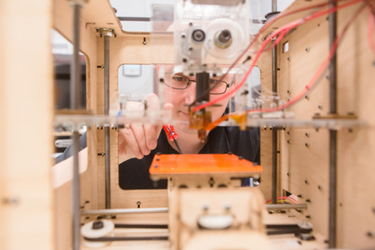
As 3D printing tools become more accessible across the life sciences, their practical role in pharmaceutical development is coming into sharper focus.
Not to be confused with bioprinting, 3D printing for process development, also called additive manufacturing because it builds one layer at a time, offers an opportunity to test part geometries and configurations that may not be available anywhere else or at least not available immediately. Design software, printer equipment, and engineering-grade and biocompatible filaments are increasingly accessible and user-friendly.
There's also a catch. As with any DIY project, the line between the quickest path to a solution and hinging a project's success on parts made in-house may not be so easy to see.
Joshua Nelson, a material qualification specialist at Takeda, takes a pragmatic stance on additive manufacturing’s role and the distinction between development flexibility and GMP requirements. For most commercial applications, custom components will still be sourced from specialized vendors rather than fabricated internally, which speaks to the economics and quality burden of in-house production.
We asked Nelson for a few quick takes on our most pressing questions.
The opportunity to iterate in real time on, for example, microfluidic chips or benchtop bioreactor impellers, seems profound and empowering. Is there a risk-based path for process developers to use this technology?
Nelson: Yes, I could see this being really interesting during development stages, engineering, and feasibility studies, assuming something is being designed that could then be made in a validated way (e.g., fabricated out of steel or through traditional polymer manufacturing).
Is there a cost/benefit analysis to be done between validation for custom components made in-house vs. requesting a custom design support from a vendor?
Nelson: I think in most instances a custom design would be fabricated by a vendor. At the end of the day, pharma companies are in the business of making medications not fabricating materials. There may be some one-offs, but it seems like more and more things are getting pushed to external providers instead of internal capabilities.
For component manufacturers, 3D printing offers a lot of opportunity to generate prototypes quickly, then proceed to more traditional component-manufacturing processes for bulk production. I think 3D printing is relatively slow compared to traditional component manufacturing, and it creates materials that require relatively high amounts of processing for a high-quality end product, whereas traditional polymer engineering techniques create materials more quickly that are closer to a finished state.

Is there ever a scenario where 3D printed components could/should come into contact with the molecule of interest? I'm assuming there are.
Nelson: It would depend on the stage of the product’s life cycle. If the goal is to develop a new device/delivery system for internal proof of concept, then yes, it would make a lot of sense to iterate designs using 3D printing, then to manufacture a device that can actually be tested in a clinical setting.
How would you recommend characterizing E&L profiles for these types of components? You recently put the cost of extractables studies upward of $40,000. Does the calculation change when the parts are produced in-house?
Nelson: The cost of the component itself is negligible in the scheme of this testing. Depending on the material, the manufacturer, and the relationship with the vendor, the component could be free to the end user, such as myself.
If we consider these as lab-grade components, which lack comprehensive data packages, what are some of the checkboxes a regulatory submission should include?
Nelson: It would really depend on the use-case of the material and its degree of product contact. A large part of the qualification of materials, in general, is ensuring there are adequate quality procedures in place to guarantee all lots of the material are essentially identical.
The big question to me is how would you determine what a lot size of the component is when you’re just printing one-by-one? Is it based on the lots of resin and finishing materials used? What is the control around the manufacturing? What types of testing are we performing routinely? If the lot size is inadequate, you could end up generating more samples for certification testing than for actual use.
For what it’s worth, we did briefly discuss trying to 3D print components when COVID supply constraints were problematic, but the conversation quickly highlighted the issue of validating the 3D printing process and ensuring component quality in a way that wasn’t astronomically more expensive and time/resource-intensive than continuing with externally procured materials.
About The Expert:
 Joshua Nelson is a senior material qualification specialist at Takeda. Prior to joining Takeda, he worked as a QC chemist and as a project management consultant for clinical trials focusing on central nervous system disorders. He received his Ph.D. in inorganic chemistry from the University of Pennsylvania.